Sometimes as Leaders, We Become the Bottleneck
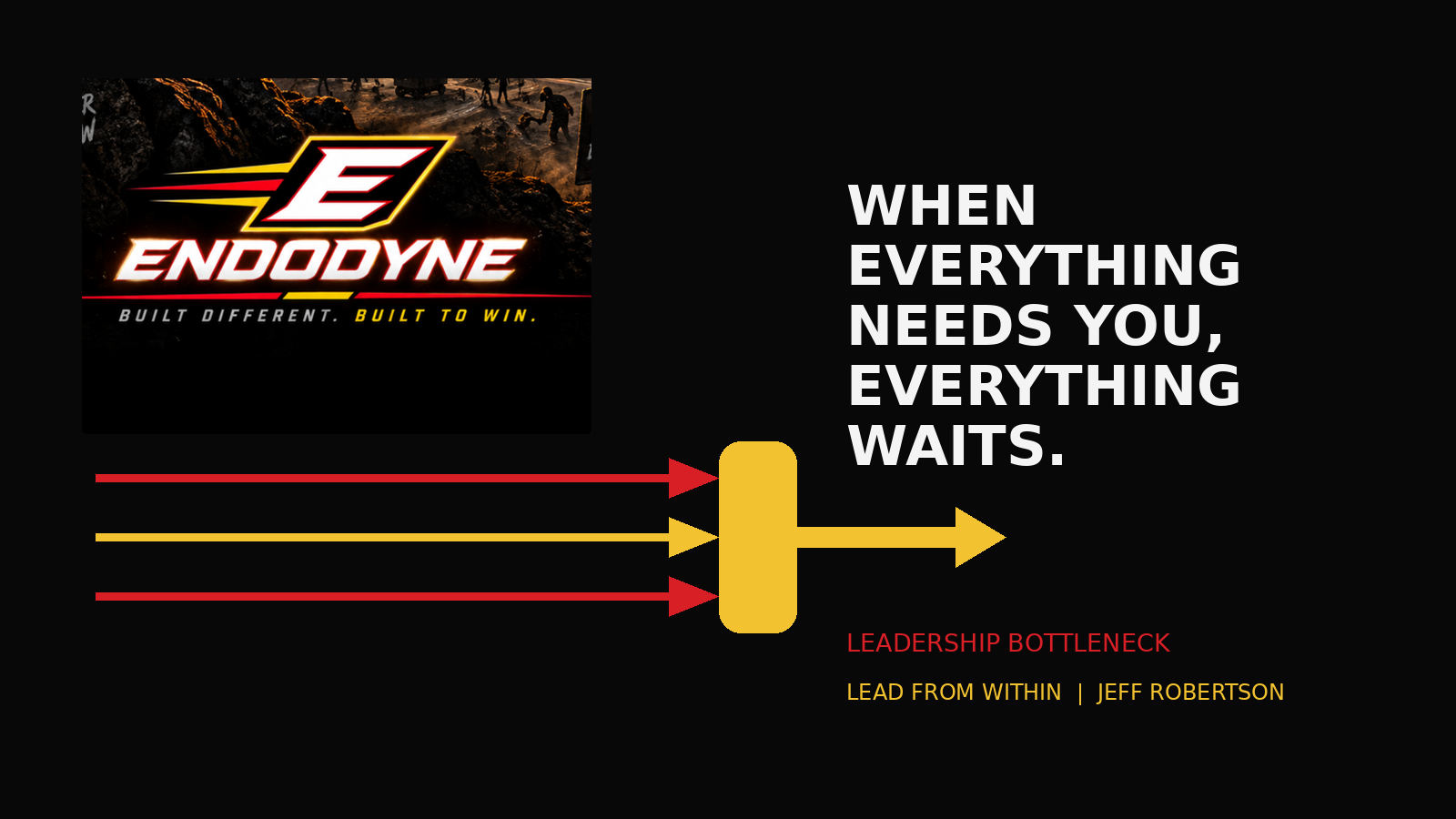
If everything needs you, everything waits on you.
You ever have one of those days when everybody needs something from you?
Your phone starts ringing before you’ve had your first cup of coffee.
An employee needs an answer.
Somebody else has a problem.
A customer wants to talk to the boss.
A decision that should’ve taken five minutes turns into a thirty-minute conversation.
Before you know it, it’s lunchtime, and you haven’t touched the one thing you actually needed to get done.
Sound familiar?
Sometimes as leaders, we become the very thing slowing everybody down.
And we don’t always recognize it.
Think about a business owner.
You’ve hired people. You’ve trained them. You’re paying them to do a job.
Yet somehow, every decision still comes back to you.
Every problem needs your attention.
Every little change requires your approval.
And then you wonder why you’re exhausted.
Here’s the part nobody wants to hear.
Sometimes we create that dependency ourselves.
We want things done right. We know we can handle them faster. We’ve been doing this long enough to know what works.
So we jump in.
We answer the question.
We solve the problem.
We make the decision.
And every time we do that unnecessarily, we may be teaching somebody to wait for us instead of trusting their own judgment.
Now think about an emergency scene.
You have people arriving, changing conditions, radio traffic, and decisions that carry real consequences.
The person in command can’t personally perform every task.
They need to maintain awareness of the bigger picture.
They need people who understand their responsibilities, recognize changing conditions, and act within their authority.
And when something changes that affects safety, they need that information immediately.
That’s not giving up command.
That’s making command effective.
I see something similar coaching baseball.
You can stand in the dugout and yell instructions all afternoon.
Move here. Watch that runner. Adjust your approach. Pay attention.
But eventually, those kids have to recognize what’s happening in front of them.
They have to think.
They have to make adjustments.
They have to learn to respond without waiting for somebody to tell them every move.
That’s development.
And leadership works the same way.
Now don’t misunderstand me.
I’m not saying you should stop helping people.
I’m not saying you should dump responsibilities on somebody and disappear.
And I’m certainly not saying that needing help makes somebody weak.
I’m saying you need to recognize the difference between the problems that require your leadership and the problems that require somebody else to develop theirs.
That’s a big difference.
Sometimes your team needs a decision.
Sometimes they need clarity.
Sometimes they need training.
And sometimes they need you to trust them enough to let them do the job you hired them to do.
I’ve had to learn that myself.
There was a time when I’d walk into somebody’s office carrying every frustration I had.
I learned pretty quickly that identifying a problem is only part of the work.
You need to be thinking about what comes next.
What can you do?
What options have you considered?
What decision actually needs to be made?
But leadership also means recognizing when you’ve reached the limits of your responsibility or capacity and bringing the right people into the conversation.
And when an urgent safety concern shows up, you speak up immediately, whether you’ve figured out the solution or not.
You don’t have to carry everything to be accountable for the outcome.
That’s where Endodyne comes into the conversation.
Clarity Is Command.
You cannot focus on what matters when you’re trying to carry everything.
Think about that for a minute.
How much of your day goes toward problems you can actually solve?
How much goes toward things somebody else should own?
And how much time do you spend worrying about things you cannot control?
That’s the noise.
And when you allow that noise to consume your attention, you start missing the signal.
The important decision.
The problem nobody else recognizes.
The opportunity sitting right in front of you.
The person on your team who needs guidance instead of another set of instructions.
Being busy doesn’t automatically mean you’re being effective.
Sometimes the most important leadership move is recognizing what doesn’t need you.
Not because you’re avoiding responsibility.
Because you’re making room for the responsibilities that actually belong to you.
That’s awareness.
And awareness precedes action.
Here’s something I want you to try.
The next time somebody brings you a routine problem, resist the urge to immediately give them the answer.
Ask them:
“What do you think we should do?”
Then listen.
You may discover they already know.
Or you may discover they need more training, clearer expectations, or better boundaries.
Either way, you’ve learned something useful.
Now take it one step further.
Ask yourself:
What am I trying to control that I need to release?
That’s one of the questions I teach through the Endodyne Signal Check.
Because sometimes the problem isn’t the amount of work in front of us.
It’s our unwillingness to recognize what is actually ours to do.
We hold on to decisions because we don’t trust somebody else.
We stay involved in every problem because we think nobody will handle it the way we would.
We confuse being involved with being valuable.
And eventually, we build an entire operation around our own availability.
Then we wonder why everything stops when we’re not there.
That’s not sustainable leadership. That’s dependency.
And it’s something we can change.
Start by identifying one decision, one responsibility, or one recurring problem that doesn’t need to come through you.
Give the right person clear expectations.
Give them appropriate authority.
Make sure they understand when to bring you into the conversation.
Then let them work.
Watch what happens.
Adjust what doesn’t work.
Build on what does.
Because the path confirms itself in motion.
And remember, doing nothing does nothing.
Here’s the question I want you to consider today.
Are you leading your people, or have you trained them to depend on you?
Being needed by everyone isn’t always a sign of strong leadership.
Sometimes it’s a warning that you’ve built a system that can’t operate without you.
And that’s something worth fixing.
Follow the Signal.
Filter the Noise.
Clarity Is Command.
Lead from within.
Endodyne Leadership
Built Different. Built to Win.
Related reading: Sometimes as Leaders, We Confuse Giving Directions With Creating Understanding, A Good Coach Doesn’t Do Your Thinking for You, and more Endodyne leadership perspectives.